
One year on from the Summit of the Future
Why future generations thinking is still the answer
Christiny Miller leads ZOE’s work on governance and policy design, focusing on long-term governance and intergenerational fairness. On the anniversary of the United Nations Summit of the Future, she wrote for Common Dreams about work to implement global commitments to ‘safeguard the future’ on the ground.
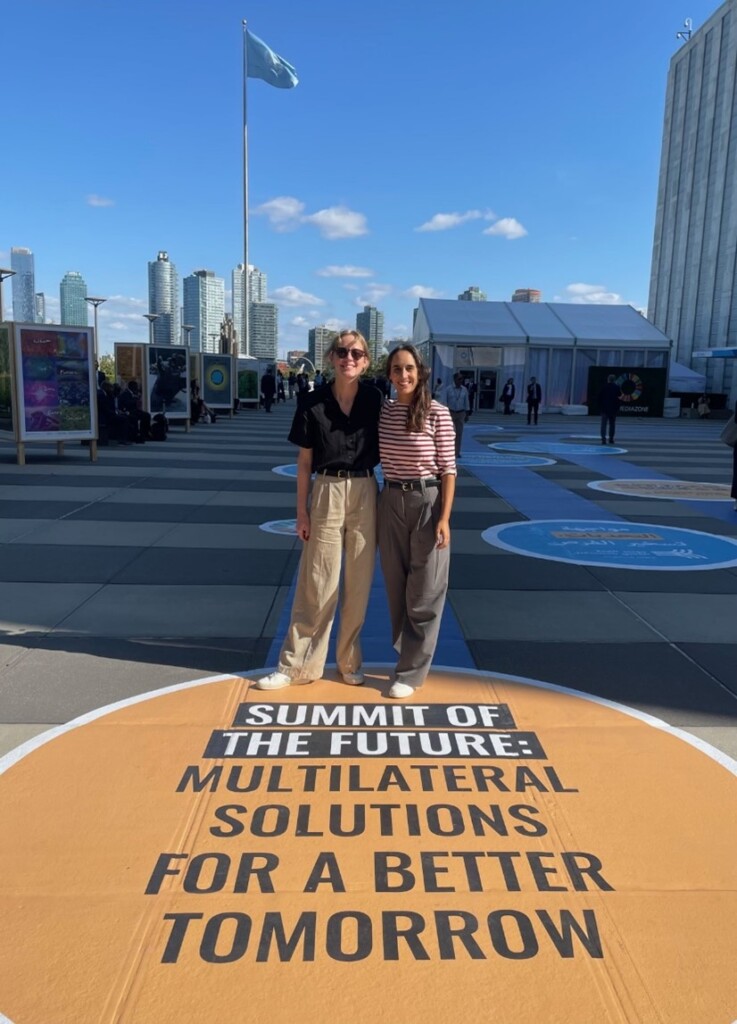
On this day last year, I was at the United Nations Summit of the Future in New York where world leaders agreed a global Pact to “safeguard the future”.
The Pact for the Future, adopted by the UN General Assembly, lists 56 actions governments have committed to. These cover peace and security, sustainable development, science and technology, youth, and global governance – all with the ultimate goal of protecting the needs and interests of present and future generations.
The challenges are immense. As the preamble to the Pact states, “If we do not change course, we risk tipping into a future of persistent crisis and breakdown”. But to start to confront the challenges we need multilateral cooperation for the long term and the Pact provides a foundation for this.
I left the US feeling hopeful.
A year on, it’s hard to hold on to that sense of hope. The world feels like a very different place this September compared to last.
Could such a summit even take place in 2026? Given Trump’s ‘my way or the highway’ approach to international diplomacy and his weaponization of tariffs in trade relation; and given the lack of progress towards negotiating a ceasefire in Ukraine and ending the genocide in Palestine, it’s hard to imagine a diplomatic consensus being found today on leaving a better world for future generations.
A precious Pact
This downward spiral of the last 12 months makes the Pact even more precious.
Amidst all the chaos and conflict in the world, with war raging, famine, extreme weather events, and the very fabric of our democracies coming apart at the seams, these commitments provide a vision to hold on to.
For our democracies to function we need to repair the social contract between generations and work towards such a shared vision of the future. Participation in democracy is key across generations – for individuals to say what their priorities are and choose representatives to act on the things they care about. However, participation isn’t equal across generations, and thus nor is representation.
In the 2024 US presidential election, voter turnout was lowest for the 18-24 age group; less than half of citizens in this age bracket voted. By contrast, the highest turnout was among 65–74 year-olds, three quarters of whom voted. Similar voting patterns can be observed internationally.
It is natural that younger people are reluctant to participate in democracy when they feel governments are not acting in their longer-term interests – the climate crisis being the prime example. To build trust, governments need to show that they are listening and find ways to bring the voices of young people and future generations into decision-making processes.
Creating common visions about a desired future gives governments a goal to work towards. Having a clear vision helps them design policies knowing what direction they want to move in. Having broad, diverse participation can give them the support of the people.
Future generations governance uses co-creative and participatory methods, as well as tools like strategic foresight, to drive towards shared visions.
Shared visions
While it might feel like it, it’s not all doom and gloom in the world today.
Away from the front pages and social media feeds work is being done in different places to strengthen long-term thinking and the consideration of future generations in decisions.
Wales continues to be a leader. Its independent Future Generations Commissioner has existed since 2015 to support and challenge the Welsh government to represent the interests of those not yet born. This role was a result of a participative visioning process with citizens which set out in a legal Act seven wellbeing goals to, “create a Wales that we all want to live in, now and in the future.”
Here in Europe, we have high hopes for the European Union’s first ‘intergenerational fairness’ strategy. Last year the bloc appointed its first Commissioner for Intergenerational Fairness responsible for, “making sure decisions taken today do not harm future generations”. Their work has the potential to provide a home for long-term thinking in the EU system and to ensure the interests of future generations are respected throughout EU policy making.
Still under development, the strategy has had a huge amount of input from experts and citizens – myself included.
Another country setting a precedent is Norway. Earlier this year it convened a national citizens assembly to discuss how — as one of the richest countries in the world — it can use its wealth to benefit the world, Norwegians and future generations. One of the resulting recommendations in as independent Commissioner to ensure that future generations have a voice in decision-making.
Outside Europe, the Australian parliament created a cross-party group for future generations, and Cameroon has created an Indigenous Commission for Future Generations.
Developments like these – at different levels, in different parts of the world – are how the long-term vision set-out last year at the UN will be implemented on the ground.
We all must remind ourselves that someday we will be the past generations and it’s our decisions now that will shape the future.
A year ago today global leaders committed us to becoming good ancestors – future generations will be the judges of whether we succeed.
Read more: Intergenerational Fairness in the EU