‘Marathon not a sprint’ – but EU’s resilience funding seems to be working

The European Commission today published its mid-term assessment of the Recovery and Resilience Facility (RRF), the €723 billion fund set-up to bolster EU economies after the shock of the Covid-19 pandemic.
The assessment paints a positive picture of the impact of the funding and says it has “delivered on its objectives so far”.
ZOE Institute warns, though, that the benefits could be lost without a continuation of funding beyond 2026. It advises the Commission to take a broader approach to economic resilience, as opposed to its current conventional macroeconomic assessment.
Lydia Korinek, policy consultant at ZOE Institute for Future-fit Economies, said:
“The EU’s cash injection to bolster economic resilience after the pandemic seems to be working. EU economies have performed surprisingly well given the difficulties they’ve faced in the last years. But this stability masks some neglected areas which could harm resilience in the future – notably a lack of measures to address social cohesion.
“With the help of the RRF EU economies have shown they can recover – but can they become more resilient to future shocks? Building long-term economic resilience is a marathon not a sprint. The EU needs to think beyond 2026 and make sure continued funding for resilience-enhancing reforms is in place for all Member States.”
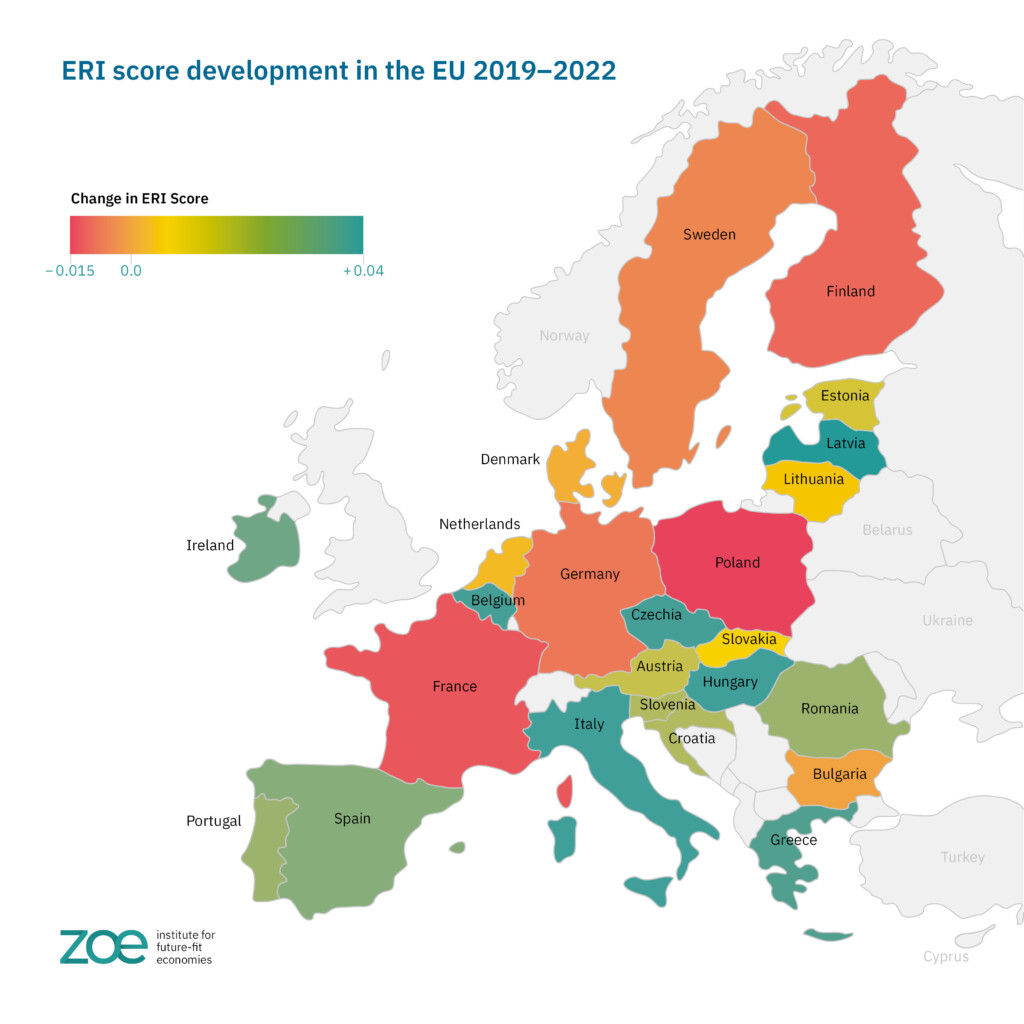
ZOE Institute’s own analysis at the half-way point of the RRF, published last week, also suggests the RRF has contributed to economic resilience during a period of unprecedented challenges. The Economic Resilience Index ranks EU economies based on a holistic measure of their abilities to absorb, recover from, and adapt to crises.
Key findings from ZOE Institute:
- The economic resilience of the EU was stable in the last years – despite economic shocks in the form of the pandemic, the Russian invasion of Ukraine and the energy crisis
- Latvia and Italy were able to increase economic resilience most in 2019-22
- Poland and France saw the biggest falls in economic resilience
- Analysis suggests the EUs’ Recovery & Resilience Facility contributed to economic resilience, especially in countries with the most comprehensive reform and investment plans and which received the most funds per capita
- Social Progress and Cohesion, which is necessary for resilience, stagnated – if not addressed this may detriment economic resilience in future