
Rachèle Chevallier
Research Assistant
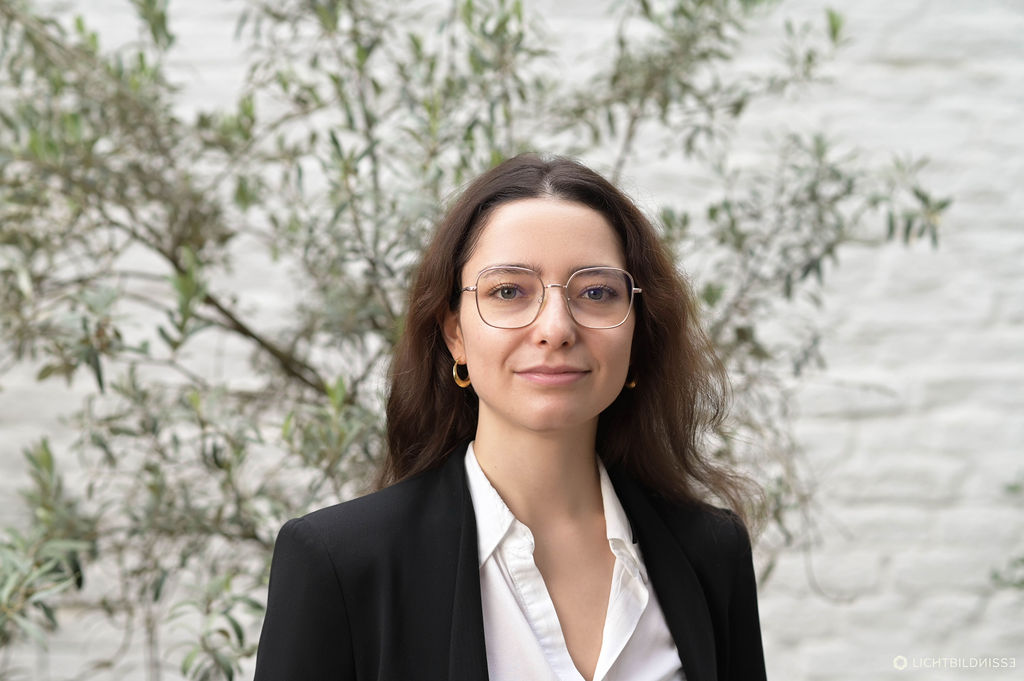
Personal Profile
Focus
Rachèle is interested in the topics of environmental and socioeconomic resilience and sustainability. As a Research Assistant at ZOE, Rachèle leads and support tasks in two Horizon Europe projects: MERGE and MAPS. These projects aim to improve and promote indicators and models on inclusive and sustainable wellbeing, facilitating their integration into policy frameworks. Rachèle is also part of ZOE’s work on intergenerational fairness.
Background
Before joining ZOE in April 2024, Rachèle gained experience on sustainable and inclusive well-being and resilience as a scientific trainee for the Joint Research Centre of the European Commission. Prior to that, she was an intern in Data and Analytics for UNDP HQ where she did research on the socioeconomic effects of internal displacement. Rachèle holds a Bachelors in Economics and a Masters in Development Economics, both from Paris 1 Panthéon-Sorbonne University. In her Master's thesis, she discussed the impacts of internal mobility on the spread of vector-borne diseases in Colombia.
Advising the Future Generations Commissioner for Wales’ office on effective budgeting
Operationalising fairness for future generations in the EU
Broadening the range of policies and models to help achieve wellbeing for all within planetary boundaries
Establishing a science-policy interface to improve indicators and models on sustainable and inclusive wellbeing
Changing the ‘how’ of policymaking through long-term methods and solutions
From principle to practice towards a new model for governance in the European Union
This MERGE publication provides an overview of workshops on challenges for applying beyond GDP indicators
A summary of work done to advance the integration of Sustainable and Inclusive Wellbeing into policy
From principle to practice towards a new model for governance in the European Union
A framework to guide EU governments' efforts to institutionalise intergenerational fairness
This MERGE publication brings forward the perspective of national statistical institutes.
How intersectional justice can guide EU policymaking toward fairness and equity
This paper outlines what the CCT could look like to ensure the best possible outcomes
A proposal for a new citizenship participation method for evidence-informed policymaking in the EU
Impact Assessments recommendations to ensure these account for long-term, cross-cutting effects and adapt in crises