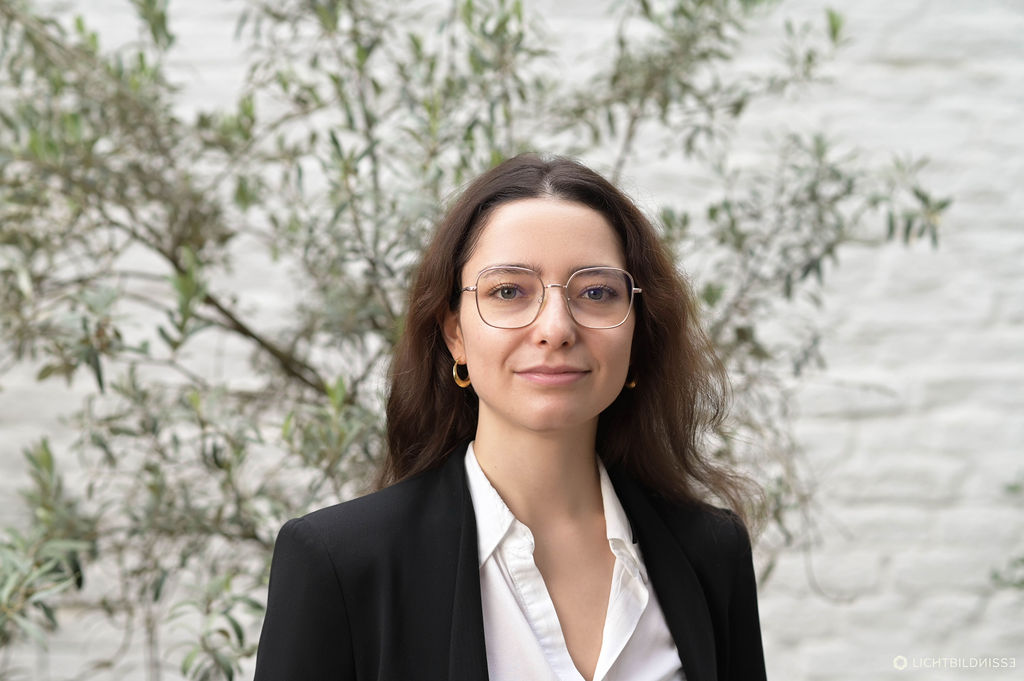
Making the voice of youth heard on Beyond GDP
Across continents, young changemakers are joining forces to reshape how the world measures progress. Rachèle Chevallier, Research Assistant at ZOE, is one of them: she is part of the Youth Network on Beyond GDP, a global group of under-35s that is channelling youth perspectives into the UN’s High-Level Expert Group. In this interview, she looks back at promising first months and explains how she brings EU-level experience into the debate.
Could you briefly introduce the Youth Network on Beyond GDP and its purpose?
We’re an international group of young people who are interested in, or already working on, Beyond GDP and sustainable development. Our main role is to act as a sounding board to global processes, especially the UN’s High-Level Expert Group on Beyond GDP (HLEG). What I really value is the network’s diversity, with people from all continents and all kinds of backgrounds, from activists to scholars and innovators, represented. Which means that we do not only bring young voices into the debate – making sure the needs from future generations are heard – but also a multitude of perspectives.
What was your motivation to apply for this voluntary network?
As someone who has been working on the topic mainly in the European context, connecting with the UN level and contributing to the HLEG were opportunities I did not want to miss. The network also offers a space to exchange knowledge, share experiences, and learn how other countries approach the Beyond GDP topic. I’m genuinely curious to see where this journey leads.
How do you hope to contribute to the network?
I want to help shape the debate by sharing insights from my work with ZOE at the EU level. Especially being part of the MERGE and MAPS projects has allowed me to gain practical experience with Beyond GDP approaches, which is I why I believe I can make meaningful contributions. Things I am keen to highlight are the importance of long-term participatory governance, the link between Beyond GDP and Intergenerational Fairness (another area I work on at ZOE), and the value of using sustainable and inclusive wellbeing as a guiding principle for any alternative to GDP.
Looking back, how did the first months unfold and what has the network achieved so far?
We first came together for an inaugural meeting in September. After that, we were asked to participate in a survey, sharing the values, best practices and policy recommendations we wanted to bring into the debate. More than 250 inputs were collected, refined and shaped into a joint vision. By the end of 2025, the network reached a major milestone presenting its official Beyond GDP policy recommendations to the HLEG at the World Social Summit.
Your key take on these recommendations?
I am very happy to see that the final recommendations recognise the importance of protecting the wellbeing of future generations, and that this is clearly linked to governance. Long-term governance – notably through building resilience and preparedness – is essential to overcoming short-termism and including future generations in decision-making. So, the fact that we now have recommendations that define 'Intergenerational Justice' as one of three guiding principles, is a very good sign. I’m excited to watch how the two concepts of Beyond GDP and Intergenerational Fairness now begin to reinforce each other on a global level.
The Youth Network on Beyond GDP is part of the initiative "Youth Moving Beyond GDP" and was jointly launched in 2025 by the Beyond Lab at UN Geneva, Rethinking Economics International, and the United Nations Conference on Trade and Development. Find out more