Citizen engagement and trust in building long-term action
This is a guest article by Julia Jousilahti and Vera Djakonoff from think tank Demos Helsinki.
Here they write about the session they hosted at ZOE Institute’s Intergenerational Fairness Town Hall event in Brussels. The aim of this session was to discuss the role of citizen engagement in building long-term governance and come up with concrete ideas for supporting a culture of long-term thinking within the EU during the new 5-year cycle, and as the new Commissioner for Intergenerational Fairness starts their work.
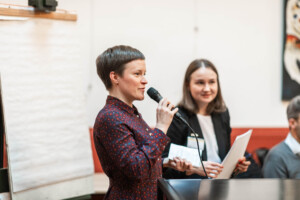
Sarah Kups from the OECD highlighted the crucial link between trust in government and citizen engagement, showing that across 30 OECD countries, people’s perception of having a say in governance is a key driver of trust. She pointed out that while many nations invest in public consultations, these do not always translate into improved trust levels, stressing the need for more meaningful participation.
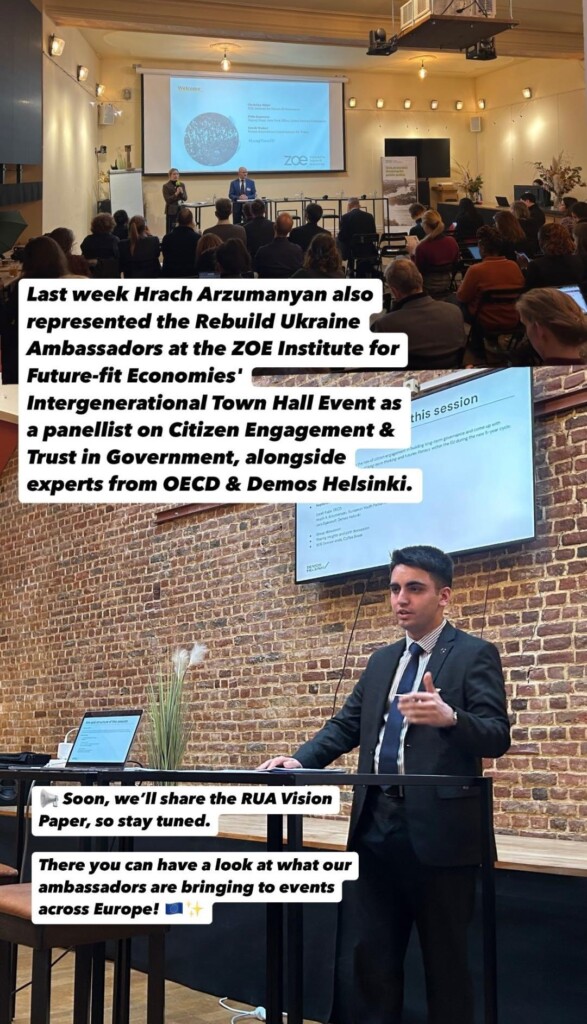
Hrach Arzumanyan from the European Youth Parliament, drawing from Ukraine’s experience in post-crisis reconstruction, emphasised that even in times of extreme uncertainty, building a culture of citizen engagement and trust remains possible and essential. He reinforced that trust and engagement are foundational for governance, advocating for participatory mechanisms, digital tools, and youth inclusion to ensure transparent and accountable decision-making.
Demos Helsinki, the facilitator of the session, highlighted the need to nurture a culture of long-term thinking, without which institutions don’t function to their full potential. This was a key learning from the White Paper Towards Long-Term Governance – From Future Awareness to Action that Demos Helsinki led as part of Finland’s long-term governance hub. In collaboration with government actors, citizens, researchers, and NGOs, the initiative aimed to build consensus on how to advance long-term governance.
Although Finland is often cited as a case study in societal preparedness and the institutionalisation of foresight, it also faces an impact gap—where future awareness does not sufficiently translate into decision-making.
Achieving lasting change requires moving two levers simultaneously: institutions and culture. Institutions such as commissioners and forums for futures dialogue are essential for facilitating collective action and safeguarding the long term. However, their effectiveness depends on cultural change. Citizens must understand, trust, and actively demand these institutions. Without such societal futures literacy, people may feel that the power to shape the future lies elsewhere, leaving them with little sense of agency and interest in discussions about the future.
“Building the muscle—you have to start somewhere with integrating these practices in policymaking and expand out from there until it becomes culture.” – participant
To drive cultural change towards futures literacy and empower citizens to shape the future within the EU, participants emphasised embedding the rights of future generations across policies and institutions. Long-termism must be institutionalised beyond political cycles, supported by bodies like a Commissioner for Future Generations, as in Wales.
Creating shared, desirable future visions—beyond risk scenarios—is key. Education, youth inclusion, and incentives for decision-makers were highlighted.